


18 Nov 2022
by Andreas Grote
Efficient and fast customer service processes are not driven by expensive CRM systems, but by a consistently agent-centric design. Marquez stands for “doing” instead of theory and demonstrates how agile web frontends and rapid prototyping can create the blueprint and foundation for a future-ready CRM solution.

Several attempts had been made to replace the aging CRM system. However, its high level of complexity and extensive customization repeatedly prevented a simple and sustainable reimplementation.
As an interim solution, a new web-based interface was therefore developed based on the existing CRM access. This solution was not intended merely as short-term relief, but also as a blueprint for a future, long-term system architecture.
The central objective was to create tangible added value for agents in their daily work. A user-centered design enabled relevant information to be presented clearly, workflows to be simplified, and acceptance of the future target platform to be increased at an early stage.
The design of the Agent Cockpit was carried out in agile, cross-functional teams. Experts from day-to-day operations, in particular agents, worked closely together with process experts, usability specialists, as well as internal and external IT experts.
The Product Owner role was temporarily assumed by LionGate. Once the project and working setup had been successfully established, this responsibility was handed back to the organization as planned.
Shortly after the start of the project, an initial MVP (Minimum Viable Product) was launched. The go-live took place in the second quarter of 2020 and was based on a BizDevOps model, ensuring close alignment between business, development, and operations.
In parallel, new functionalities were developed to enable a seamless transition from the existing legacy technology. Throughout this phase, a consistent vision for a future, modern Agent Cockpit was followed.
Today, the resulting solution serves as a requirements blueprint for the follow-up project aimed at the step-by-step replacement of legacy systems, enabling a controlled and low-risk transformation of the existing system landscape.
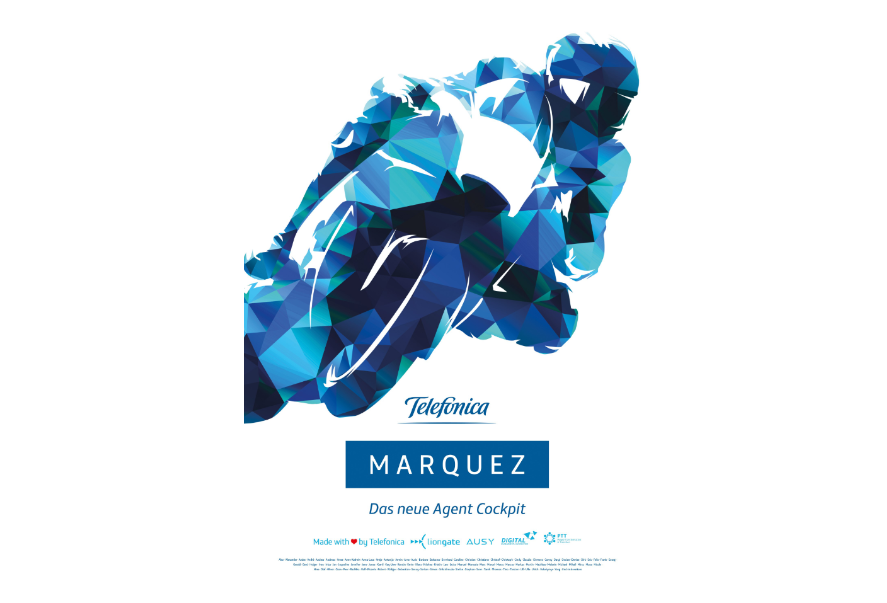
Today, around 3,500 satisfied agents use the application. This has not only resulted in significant cost savings, but also in a noticeable increase in employee motivation in day-to-day operations.
By consolidating key functionalities into a single interface, the number of systems that need to be handled in parallel has been significantly reduced. Agents no longer have to switch between different applications, leading to a substantial reduction in average handling time (AHT).
As a true all-in-one solution, Marquez covers all relevant requirements – from agent-specific settings and order management to centralized user management. The platform was consistently developed according to the principle “by agents, for agents.”
An intuitive user guidance and a well-designed user experience support agents in their daily work and actively contribute to error prevention.
In addition, training efforts were significantly reduced. This was made possible through the direct, context-based integration of condensed knowledge base content into the respective workflow steps, ensuring that new knowledge is available exactly when it is needed.


Cookie notice
We would appreciate it if you agree that we and our partners use cookies and similar technologies to understand how you use our website. This way, we can better comprehend your user behavior and accordingly adapt our website. If you agree with this, please click “Agree.” Detailed information can be found in our privacy policy, where technology providers are also named. For further information, please refer to our privacy policy.
Data Protection